From pod to bar: how cacao becomes chocolate
Every bar starts as a seed inside a fruit. Here is the long road between the tree and the wrapper, step by step.
Most of us meet chocolate as a finished bar. But before it was a bar, it was a bean, and before it was a bean, it was a seed in a heavy fruit hanging straight from the trunk of a tree.
It starts with a fruit
Cacao pods grow on trees in a narrow band around the equator. Inside each pod are a few dozen seeds wrapped in a sweet, white pulp. That pulp tastes nothing like chocolate — more like lychee or lemonade.
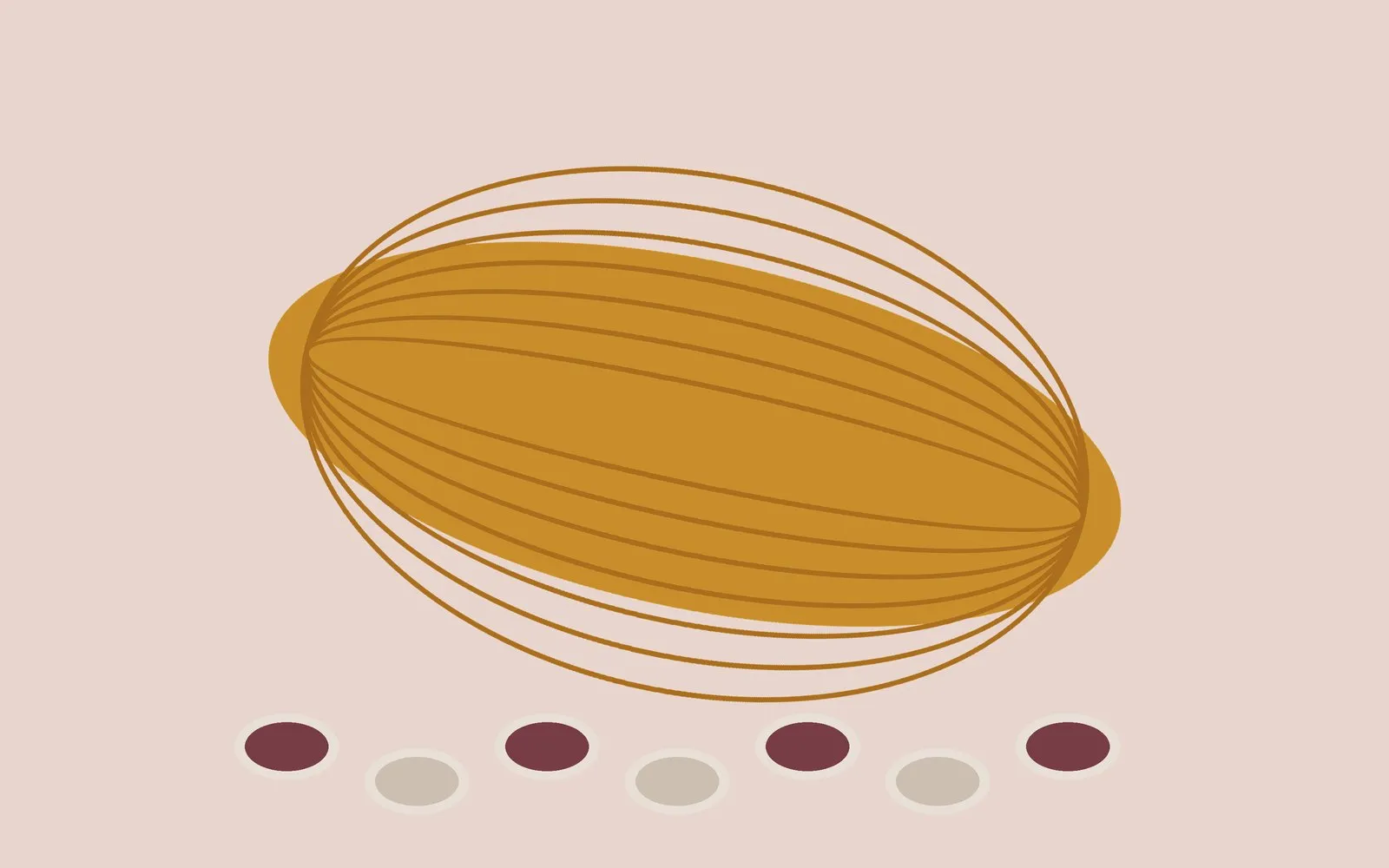 The seeds inside the pod are what we call cacao beans.
Fermenting and drying
The seeds and pulp are piled into boxes or heaps and covered for about a week. The pulp ferments, heats up and drains away, and the seeds change inside. This is where most of chocolate’s flavour begins. After that, the beans are spread out to dry in the sun.
Roasting, cracking, grinding
At the chocolate maker’s workshop the beans are roasted, then cracked so the papery shells can be blown away. What remains are nibs. Ground long enough, nibs turn into a thick liquid — cocoa mass — which is mixed with sugar (and milk, for milk chocolate) and refined until smooth.
Tempering and moulding
Finally the chocolate is tempered — carefully heated and cooled — so it sets with a shine and a clean snap. Then it goes into moulds, and only then does it become the bar you know.
A good bar tastes of the place the beans came from, and of every decision made on the way.
Next time you break a piece off, think of the week in the fermentation box. That is where the flavour was born.